
You hit publish on your blog.
Then you wait.
No traffic. No rankings. Maybe not even indexing.
At this point, most people assume one of three things:
- Google is broken
- SEO doesn’t work
- Their content is bad
None of that is usually true.
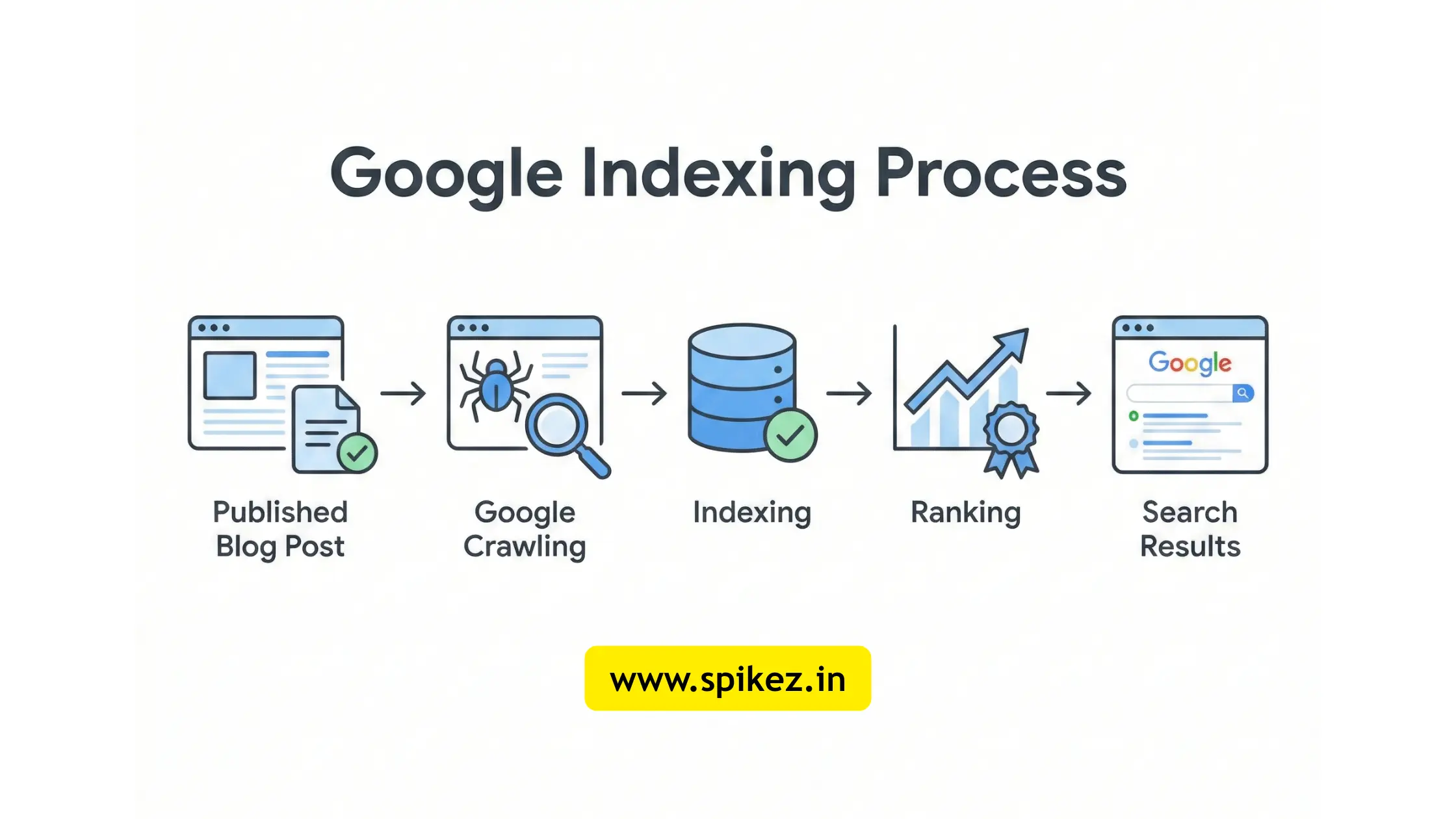
What’s missing is understanding what actually happens after you publish a blog and how Google processes new content step by step. This article breaks that down clearly—no myths, no shortcuts.
Step 1: Google Discovers Your Blog Post (Crawling)
After publishing, Google does not instantly know your blog exists.
Your page must first be discovered, which happens through:
- Internal links from existing pages
- XML sitemap submission
- External links (rare for new blogs)
- Manual URL inspection via Search Console
If your blog is not linked internally or added to a sitemap, Google may never crawl it.
If your blog is indexed but not visible on Google, it’s often caused by deeper SEO issues most website owners overlook.
👉 Brutal truth:
Publishing without internal linking is like writing a book and hiding it in your drawer.
Step 2: Google Crawls the Page (But That Doesn’t Mean Indexing)
Once discovered, Googlebot crawls your page to understand:
- Content structure
- HTML quality
- Page speed
- Mobile usability
- Duplicate signals
Important distinction:
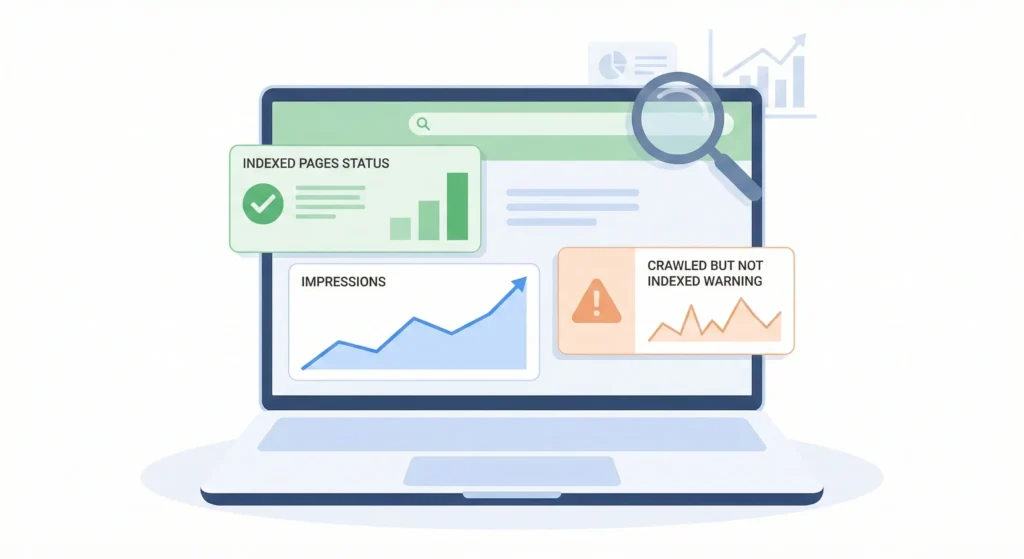
Crawled ≠ Indexed
Many pages are crawled and then quietly dropped.
Common crawl blockers:
- Thin or duplicate content
- Poor internal linking
- Slow server response
- Noindex tags (often accidental)
- Parameter-heavy URLs
Step 3: Google Decides Whether to Index the Page
Indexing is Google deciding your page is worth storing in its database.
If your page is indexed:
- It can appear in search results
If it’s not: - It’s invisible, no matter how good it is
Reasons Google may refuse to index:
- Content adds no new value
- Similar page already exists on your site
- Weak topical relevance
- Low site trust (new domains suffer here)
This is where most new bloggers panic.
Step 4: Ranking Comes Much Later (This Is Where People Lose Patience)
Even after indexing, ranking does not happen immediately.
Google needs data:
- How users interact with the page
- Whether it satisfies search intent
- How it compares to existing results
- Internal and external authority signals
For new websites, ranking can take:
- 2–6 weeks for low-competition terms
- 2–6 months for competitive keywords
If your blog is indexed but not ranking, that’s normal, not failure.
Google Crawl → Index → Rank (The Real Flow)
Here’s the simplified process Google follows:
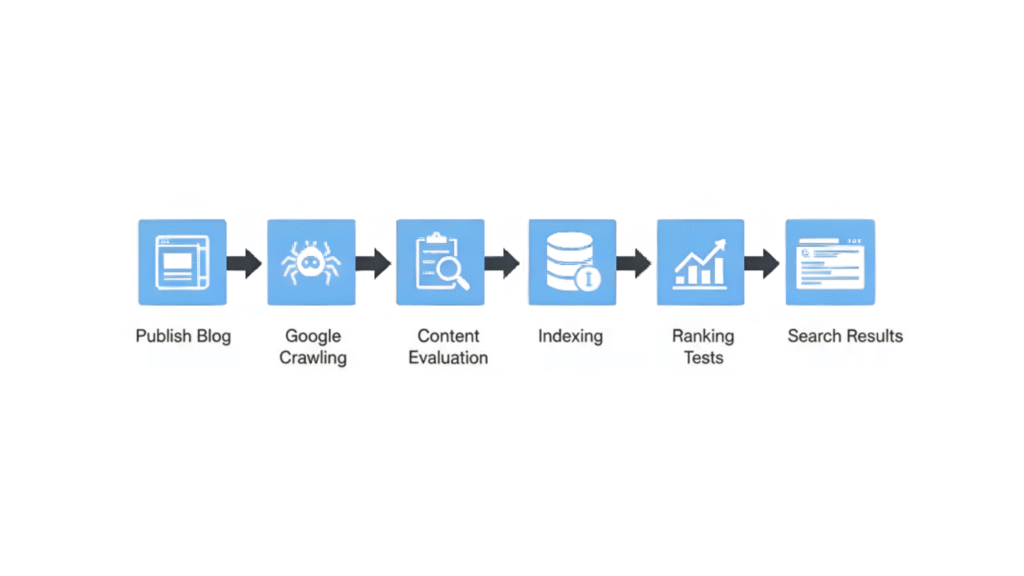
- Discover the page
- Crawl the page
- Evaluate quality
- Decide to index
- Test rankings for low positions
- Adjust based on user behavior
Skipping any step breaks the chain.
Why Your Blog Is Indexed but Not Ranking
This is one of the most searched frustrations.
Common reasons:
- Content doesn’t match search intent
- Keyword is too competitive
- Weak internal linking
- No topical authority yet
- Page lacks depth compared to competitors
Ranking is comparative, not absolute.
Your page isn’t bad — it’s just weaker than what already exists.
How Long Does Google Take to Index a New Blog?
Typical timelines:
- Hours–days: Established sites
- Days–weeks: New websites
- Weeks: Low-quality or poorly linked pages
Submitting a URL manually speeds discovery, not ranking.
Anyone promising “instant rankings” is lying.
What You Should Do After Publishing a Blog
Instead of waiting blindly:
- Add internal links from relevant pages
- Submit the URL in Google Search Console
- Share it once (not spam)
- Update old content to link to it
- Improve content depth after 2–3 weeks
SEO is iterative, not publish-and-pray.
Still stuck with pages that are indexed but not ranking?
This usually isn’t a content problem. It’s a technical or structural SEO issue that most website owners miss.
At SpikeZ, we help businesses identify and fix these issues through data-backed SEO audits.
Final Thoughts
If you understand one thing, let it be this:
Publishing a blog is not the finish line.
It’s the starting point.
Google needs signals, time, and comparisons before trusting your content. Most blogs fail not because they’re bad—but because people give up before Google even finishes evaluating them.
If your site keeps getting indexed but not ranked, it’s usually a strategy problem, not a content problem.
That’s exactly what we fix at SpikeZ—technical clarity, not SEO myths.
Zara
Insight full article very useful